Chiy weaving: From traditional craft to contemporary art
October 1, 2026
#ANTH#anthropology#Timothy O’Connor
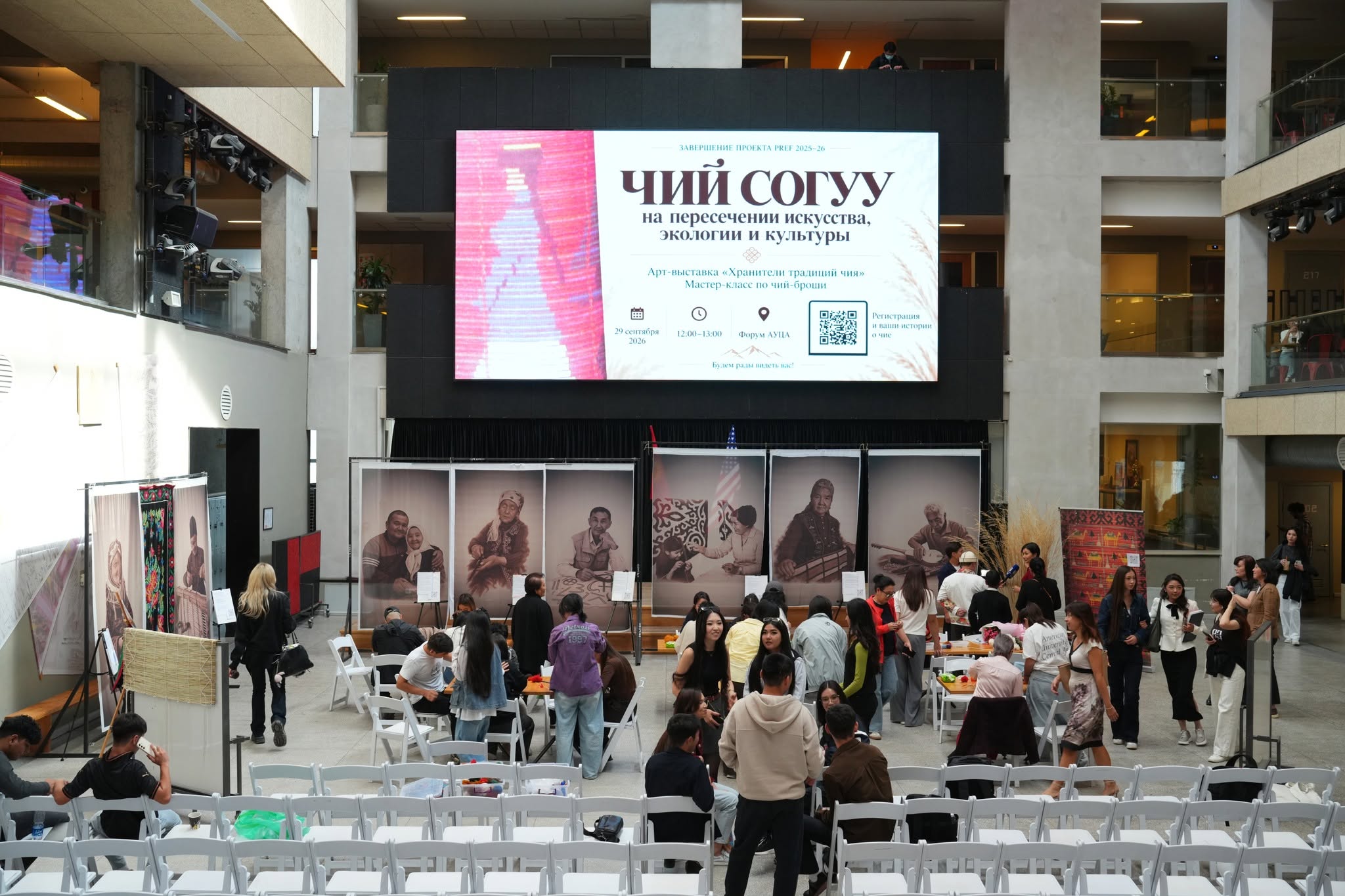
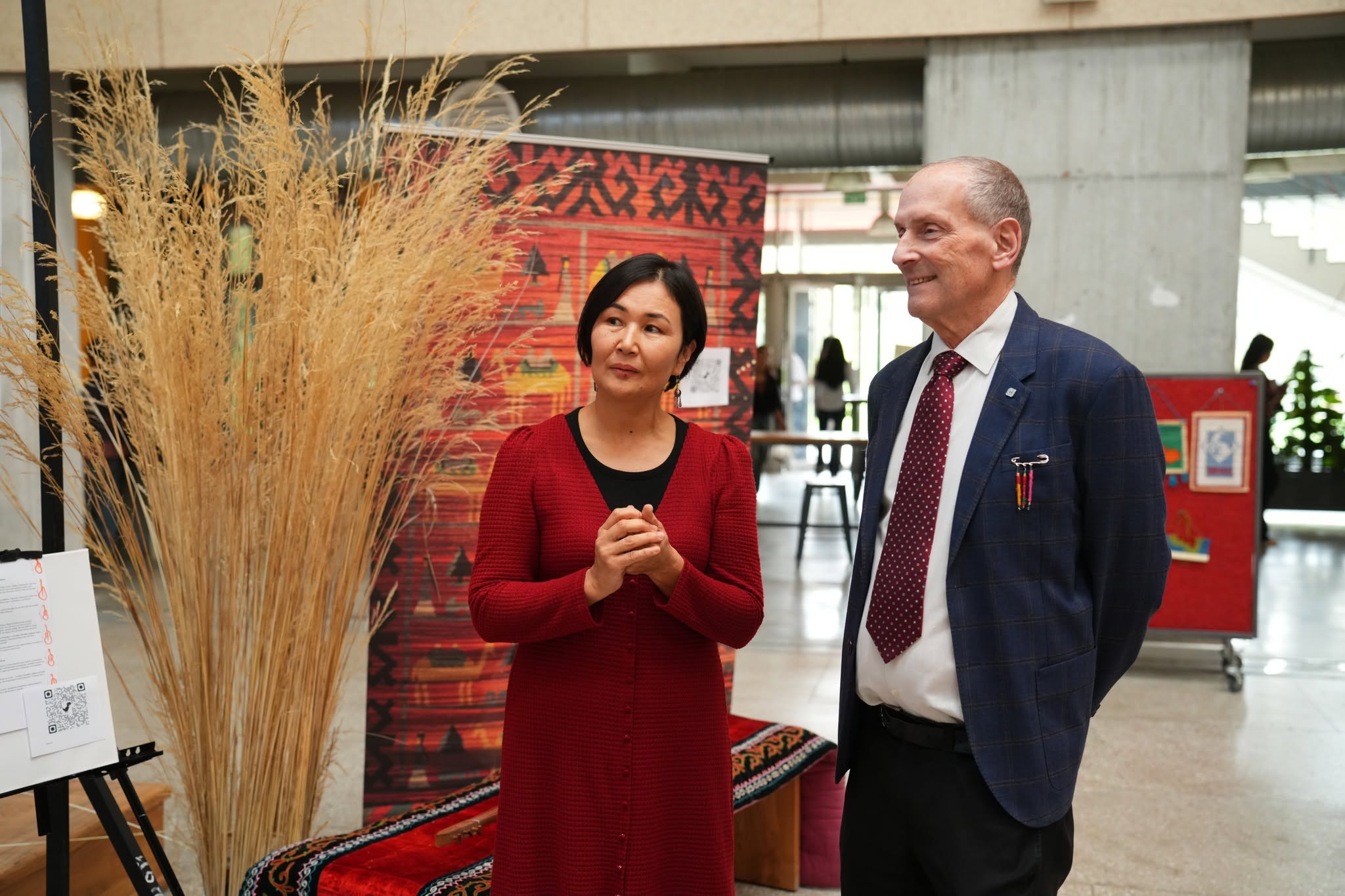
On September 29, the AUCA Forum hosted “Keepers of Chiy Traditions,” the closing art exhibition of the PREF 2025–26 project “Chiy weaving at the сrossroads of art, ecology and cultural survival.” The project was initiated and carried out by Cholpon Kuskakbaeva, a graduate student in AUCA's Anthropology program, with the support of the AUCA Presidential Research and Education Fund (PREF).
The exhibition marked the culmination of a year of research, including field trips to the Issyk-Kul and Naryn regions, meetings with artisans, collection of oral histories, and photo and video documentation of traditional chiy-weaving techniques, family archives, and the transmission of craft knowledge across generations.
The project aimed not only to study and document the tradition of chiy weaving, but also to bring greater visibility to the artisans themselves - the people whose skills, memories, and creativity keep this knowledge alive and allow it to evolve through contemporary art and design.
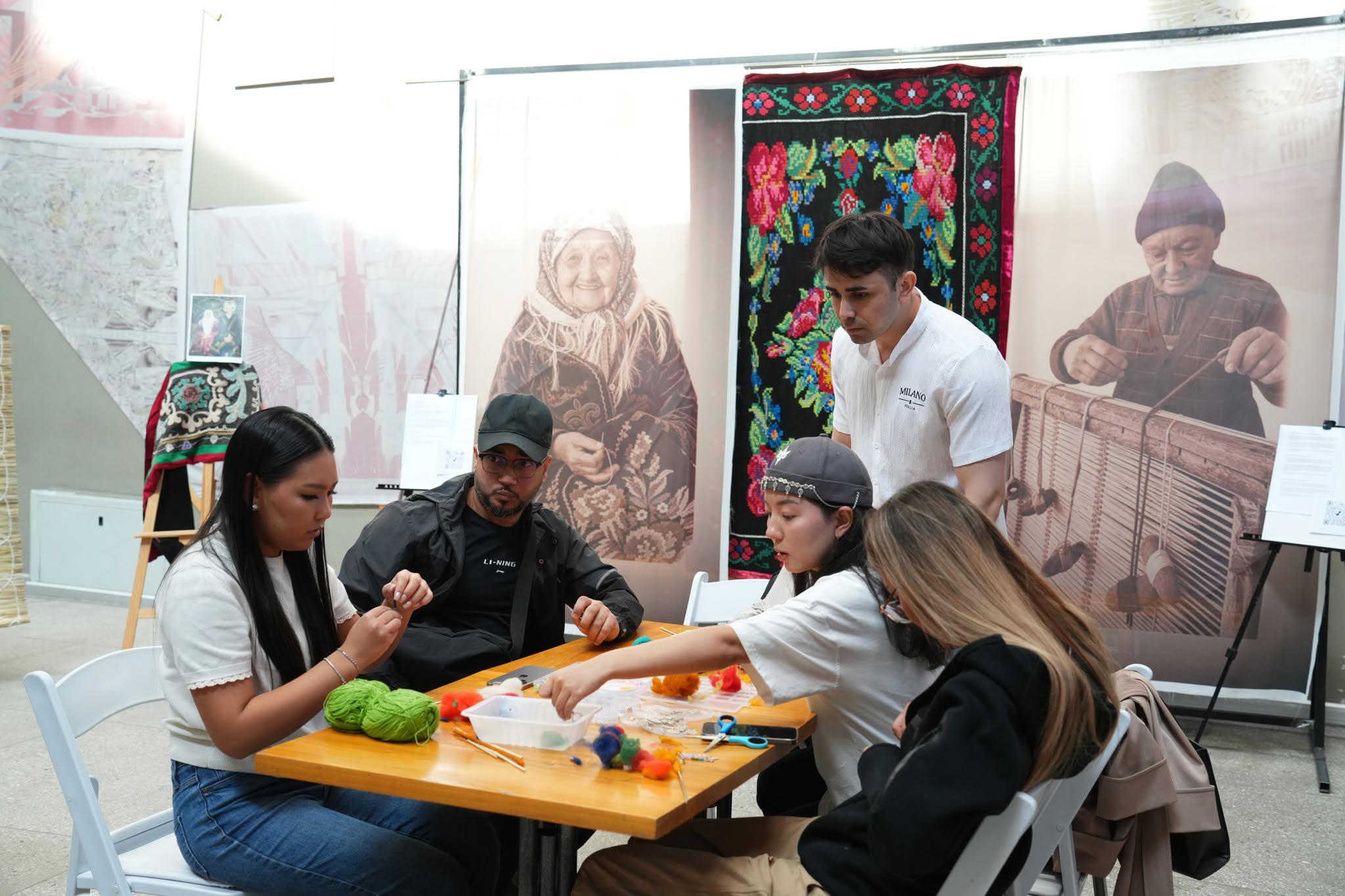
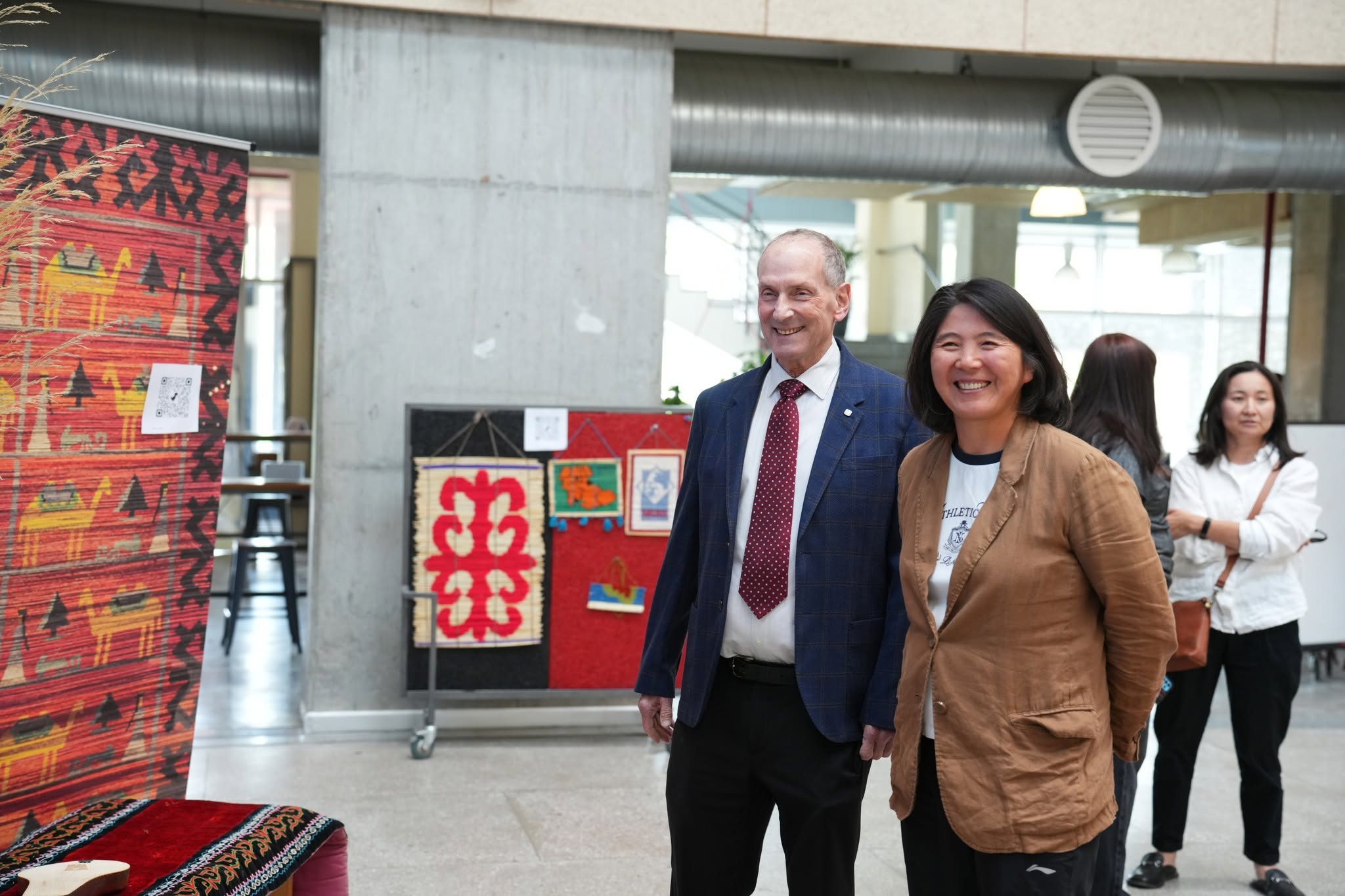
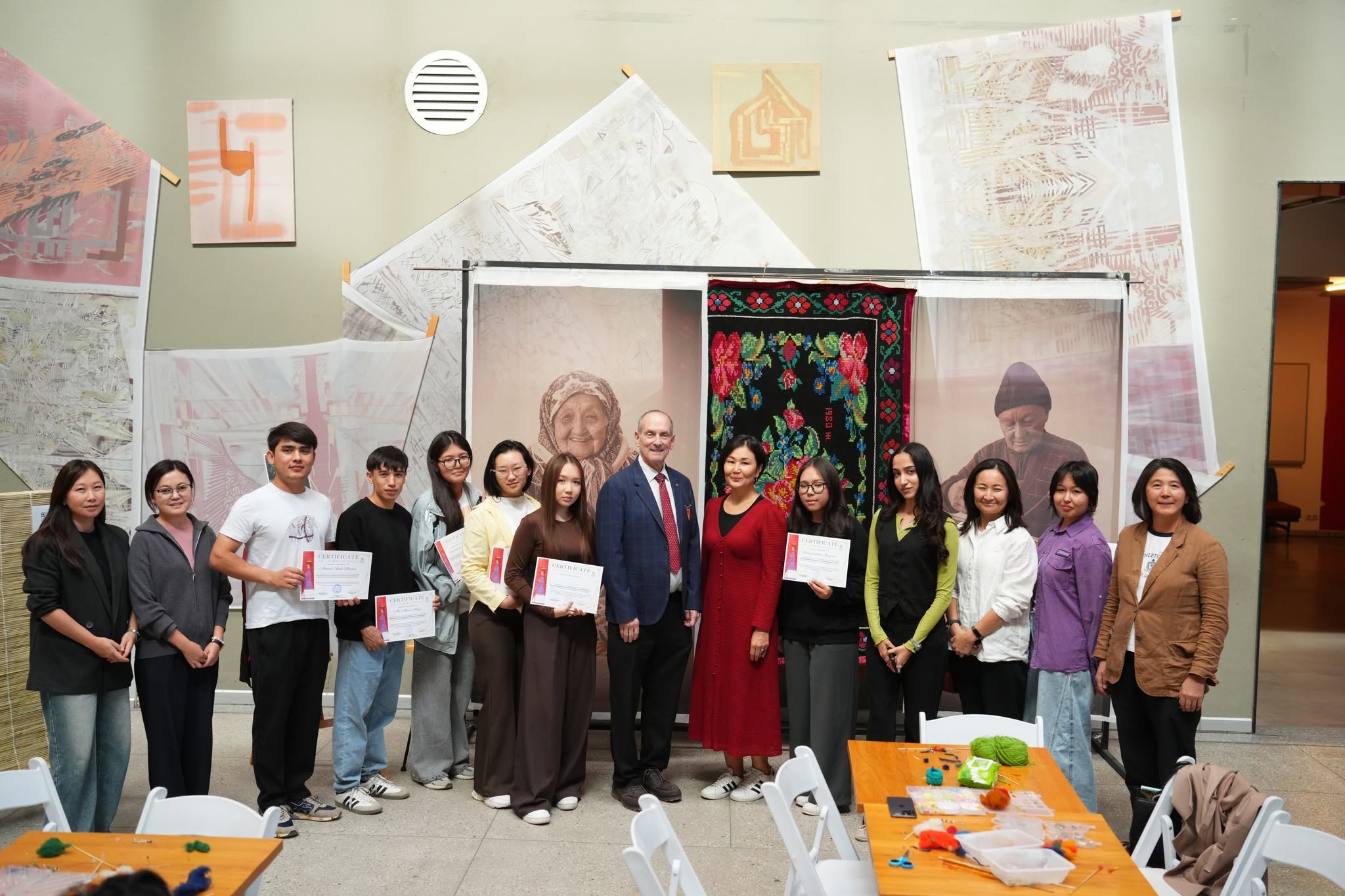
The closing exhibition, “Keepers of Chiy Traditions,” presented the research findings through large-scale textile portraits, personal stories, and handcrafted works. Visitors had an opportunity to discover the people behind the craft and explore chiy not simply as a traditional household material, but as part of Kyrgyzstan's living cultural heritage. One of the most touching aspects of the exhibition was the presence of the artisans' families. Children and grandchildren came to see portraits of their loved ones, making the event a meaningful occasion for remembering and celebrating their family heritage.
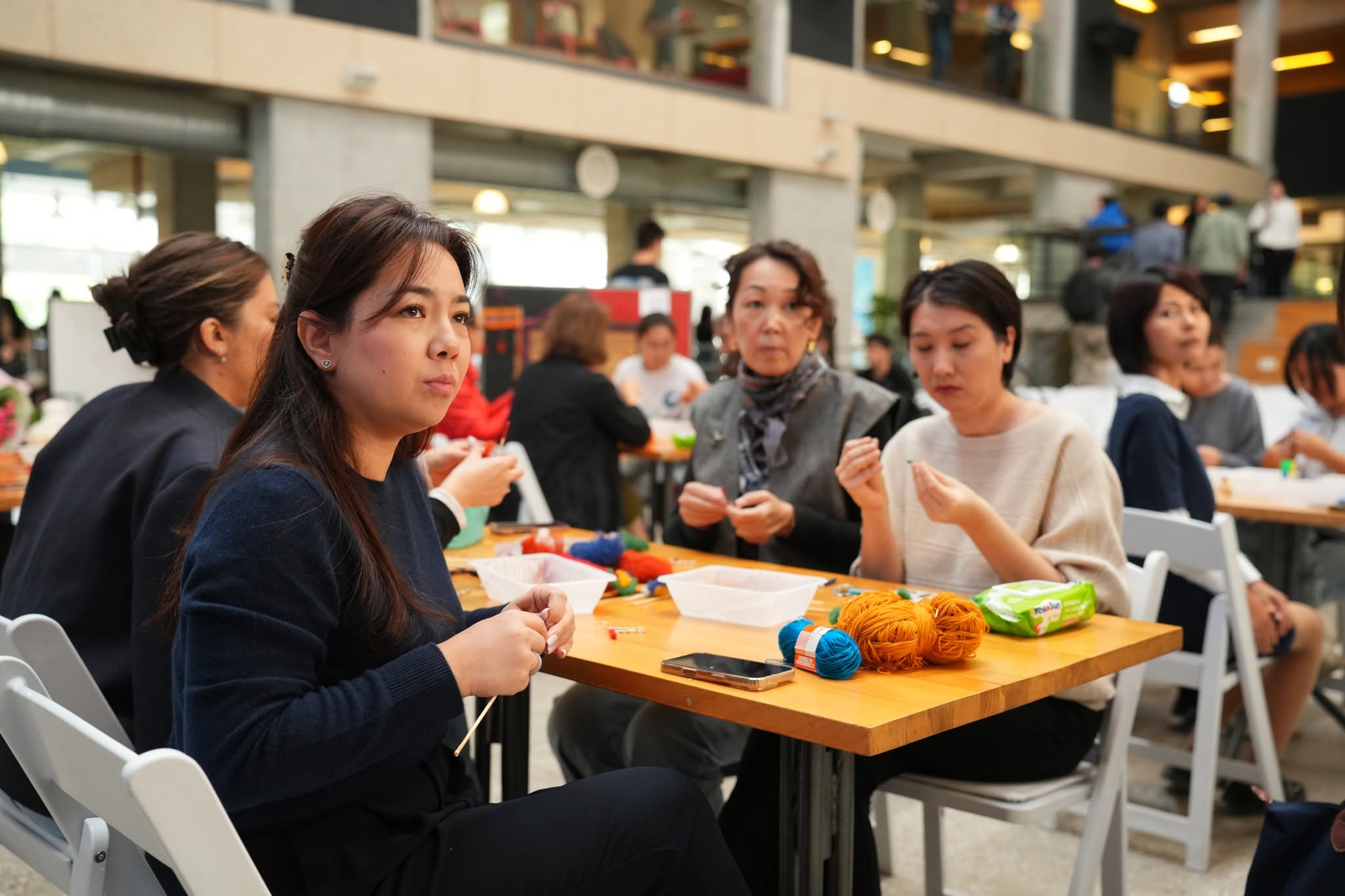
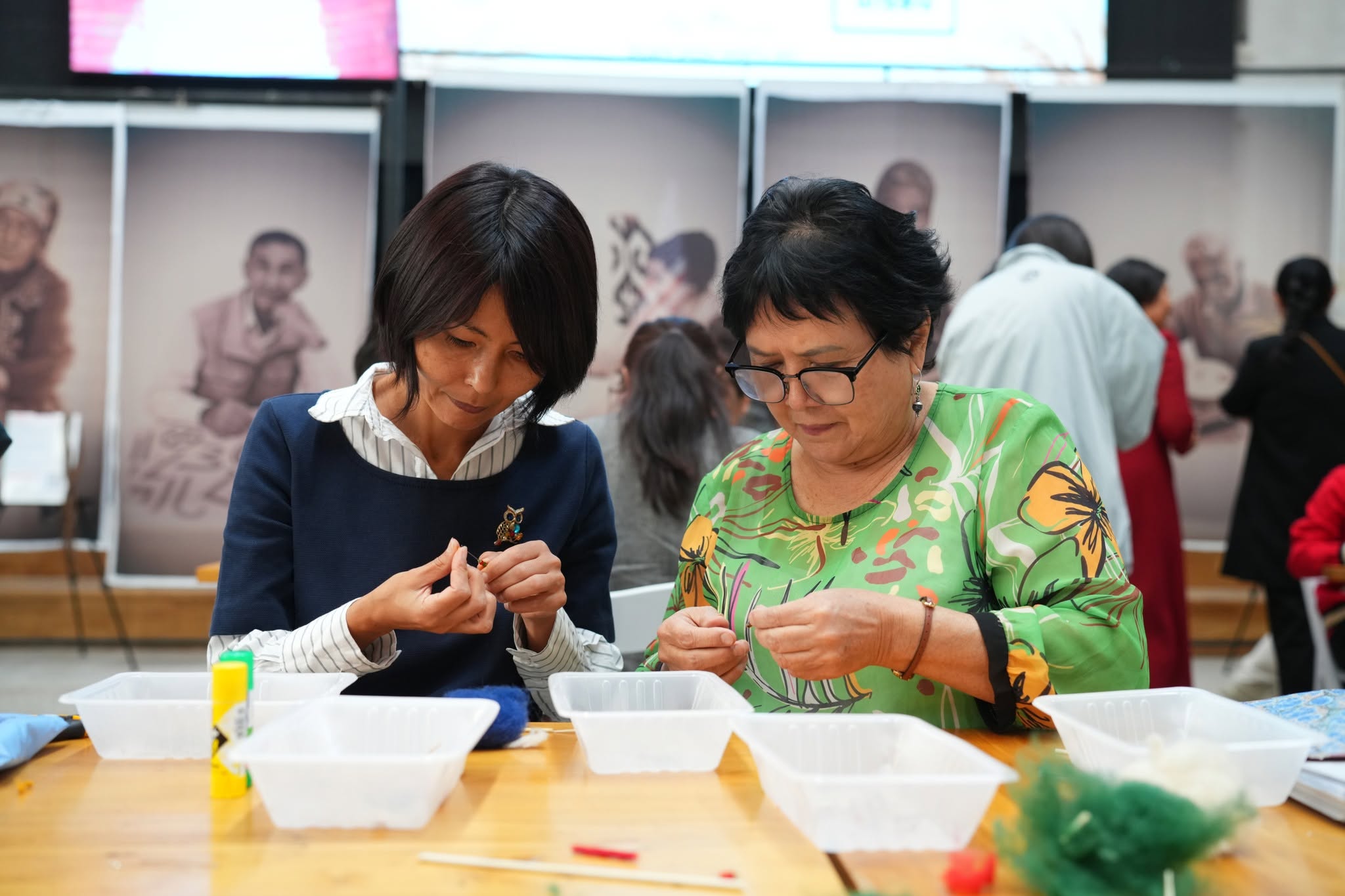
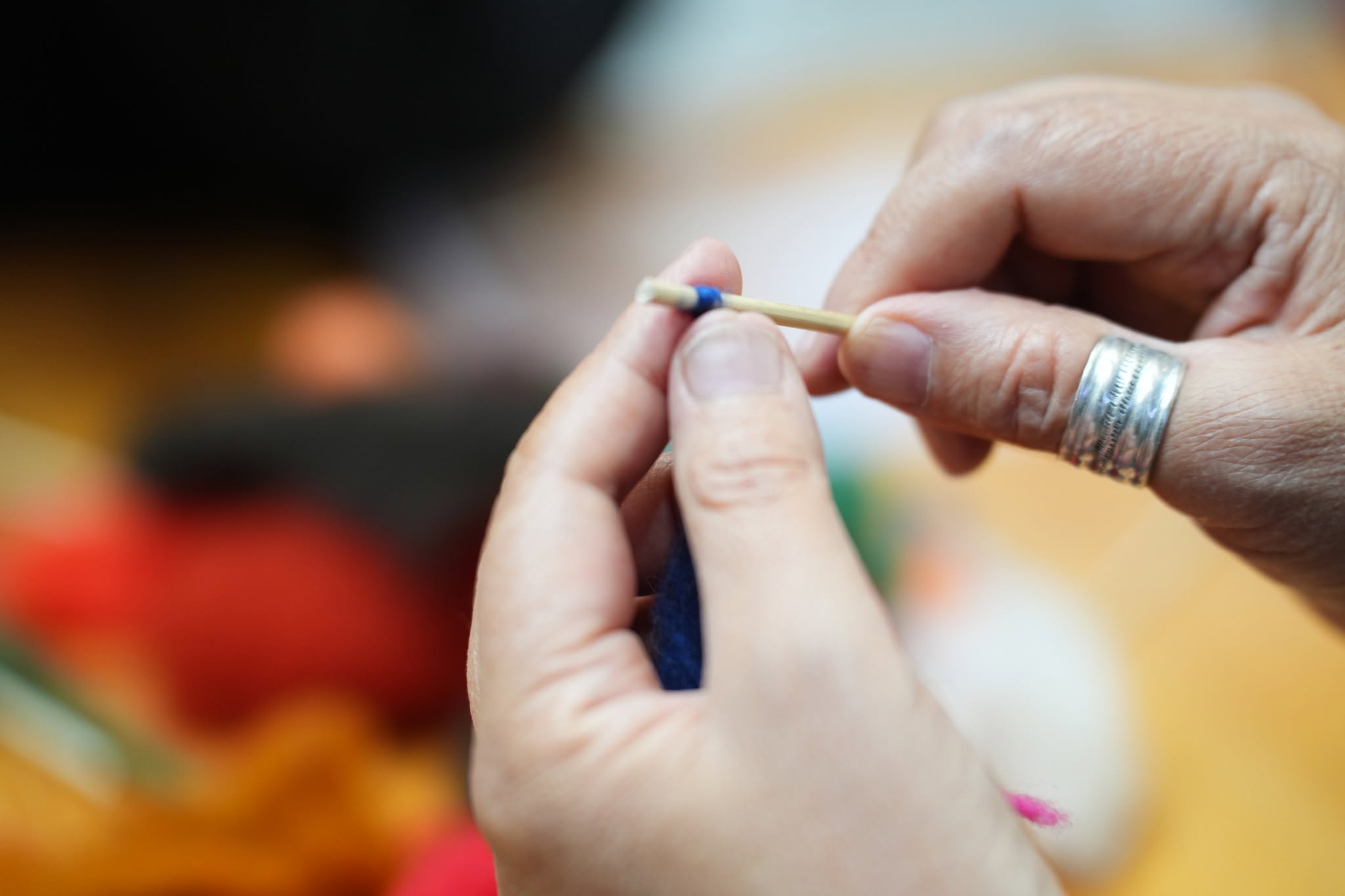
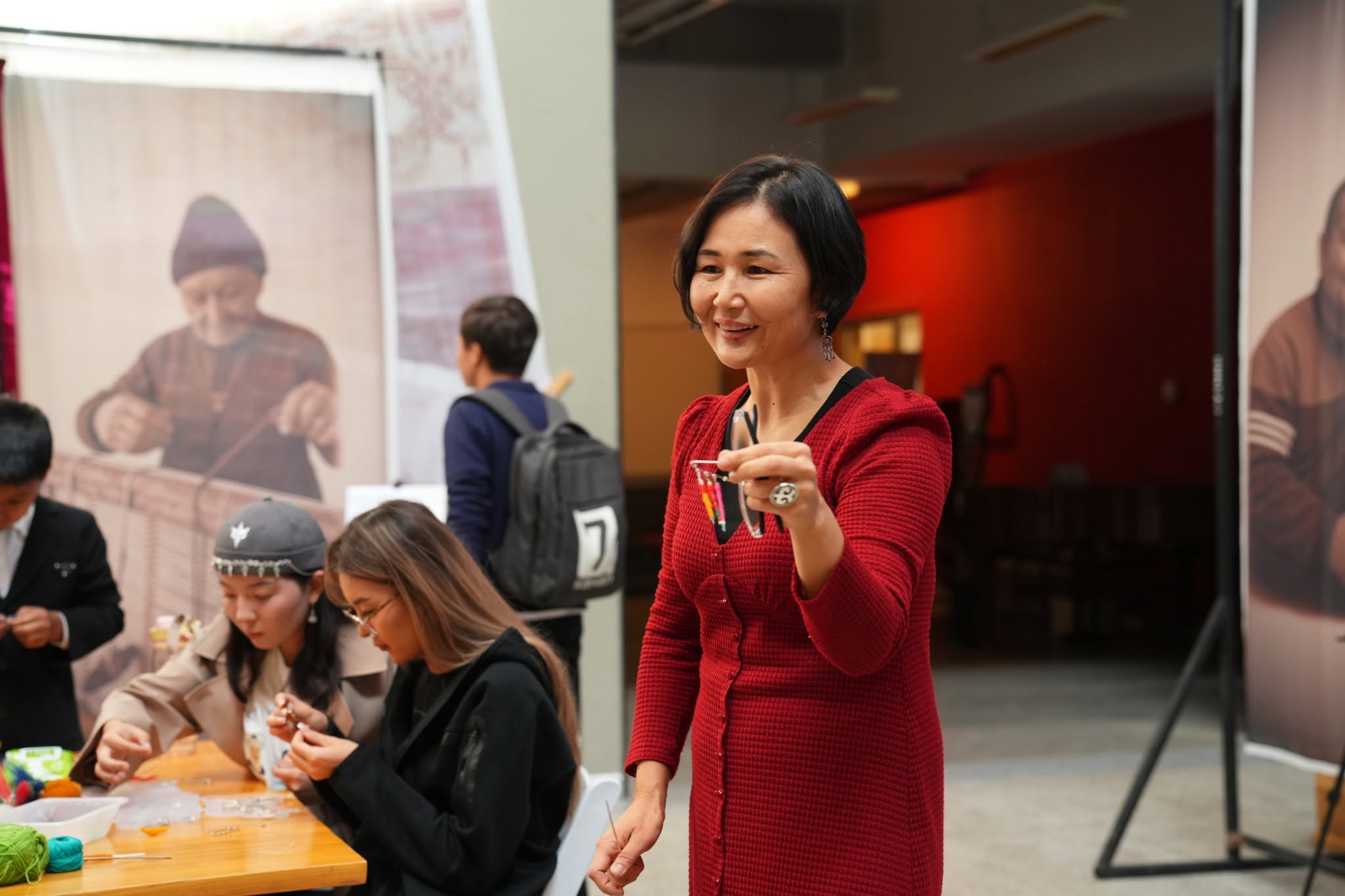
The event also featured a chiy brooch-making workshop, bringing together AUCA students, faculty, and staff. Participants explored traditional techniques through hands-on practice and created their own pieces, discovering how an ancestral craft can find new expression in contemporary design.
Several similar workshops were organized throughout the project, generating considerable interest and introducing participants to chiy through direct creative engagement.
An interactive stand, “Share Your Story About Chiy,” invited visitors to contribute their own memories, family photographs, objects, and stories related to chiy. Contributions remain welcome through the online form: https://tally.so/r/jaKAMR.
Stories of the artisans and additional research materials are also available on the AUCA website: https://auca.kg/ru/p6410938275/.
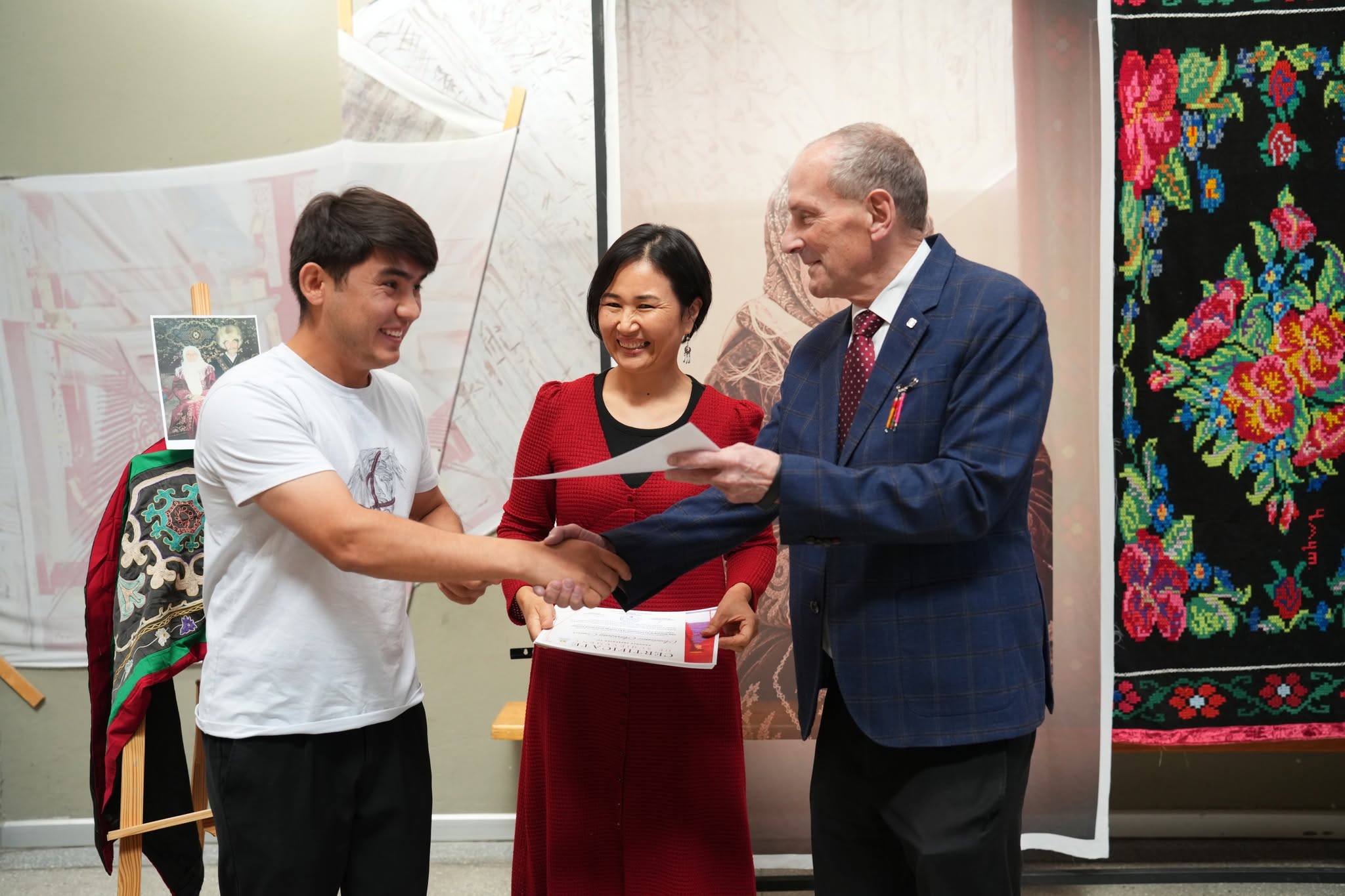
AUCA student volunteers played an important role in preparing and organizing the closing exhibition, assisting with the installation, exhibition materials, and workshop activities. In recognition of their contribution, AUCA President Timothy O'Connor presented the student volunteers with certificates of appreciation during the event.
Although the funded stage of the project has officially concluded, the research continues. Future plans include developing a visual and oral archive to preserve the stories, techniques, photographs, and knowledge of chiy artisans for future generations. The project highlights an important idea: preserving cultural heritage is not only about safeguarding objects, but also about recognizing the people, experiences, and knowledge that keep traditions alive.